New York Times Connections Mashable Hints
Word games are a fun way to test your brain and learn new things. The New York Times Connections puzzle has become a favorite for people who enjoy finding hidden links between words. It gives players sixteen words and asks them to sort those words into four groups. Each group shares a common idea. Some groups are easy to spot, while others can be tricky.
If you are searching for new york times connections mashable hints, you probably want a little help without losing the fun of solving the puzzle yourself. Mashable is one place readers may look for Connections clues and explanations. These hints can help you notice word patterns, understand confusing links, and avoid common mistakes. This guide explains how the game works, how to use hints wisely, and how to build better solving habits. You will also learn practical strategies for handling difficult categories without spoiling the entire challenge.
What Is the New York Times Connections Game?
Connections is a daily word puzzle published by The New York Times. The game shows sixteen words in a grid. Your goal is to divide them into four groups of four related words. Each group follows a hidden theme, such as colors, animals, movie titles, or words with similar meanings.
The challenge comes from words that may fit more than one category. For example, a word could describe a color and also appear in a sports team name. You must find the connection intended by the puzzle. Correct groups are usually marked with different colors based on their difficulty. This makes the game a mix of vocabulary, logic, and careful observation. You do not need special equipment or advanced skills. A little patience and a clear plan can make each puzzle easier to understand.
What Are New York Times Connections Mashable Hints?
New york times connections mashable hints refers to searches for clues and guidance related to the daily Connections puzzle and Mashable’s puzzle coverage. Players often use these hints when they cannot find the hidden links between words. A good hint helps you think in a new direction instead of simply giving away every answer.
Hints can be especially useful when several words appear related. You might notice four words connected to food, but one belongs to a different group. A clue about word meanings, phrases, or common expressions may help you find the correct category. Some players prefer broad hints first, while others want category names or complete solutions. The best choice depends on how much help you need. If you enjoy solving puzzles independently, start with small clues and reveal more information only when necessary.
How Mashable Can Help Connections Players
Mashable publishes entertainment and puzzle-related content, including coverage of popular word games. Depending on the day’s coverage, readers may find Connections hints, category clues, or solutions. These resources can help players who feel stuck or want to check their completed grid.
However, hints and answers can change every day. Always check the date before reading a solution. A page for yesterday’s puzzle will not necessarily help with today’s grid. You should also remember that external guides are optional. You can enjoy Connections without visiting another website. Try solving the puzzle on your own first, then use a clue if you need fresh ideas. This approach protects the challenge while still giving you useful support when the words seem confusing.
How to Play Connections Step by Step
Playing Connections is simple once you understand the main goal. Open the official Connections game and study the sixteen words on your screen. Look for words that share a clear meaning, belong to the same group, or appear in familiar expressions. Select four words that you believe belong together, then submit your guess.
If your group is correct, the game removes those words from the board. Continue until you find all four groups. You have a limited number of mistakes, so avoid making random guesses. If your selection is wrong, pause and review the words before trying again. Sometimes, removing one correct group makes the remaining connections much easier to see. Think of each solved group as a clue that helps you understand the rest of the puzzle.
Understanding the Four Connections Categories
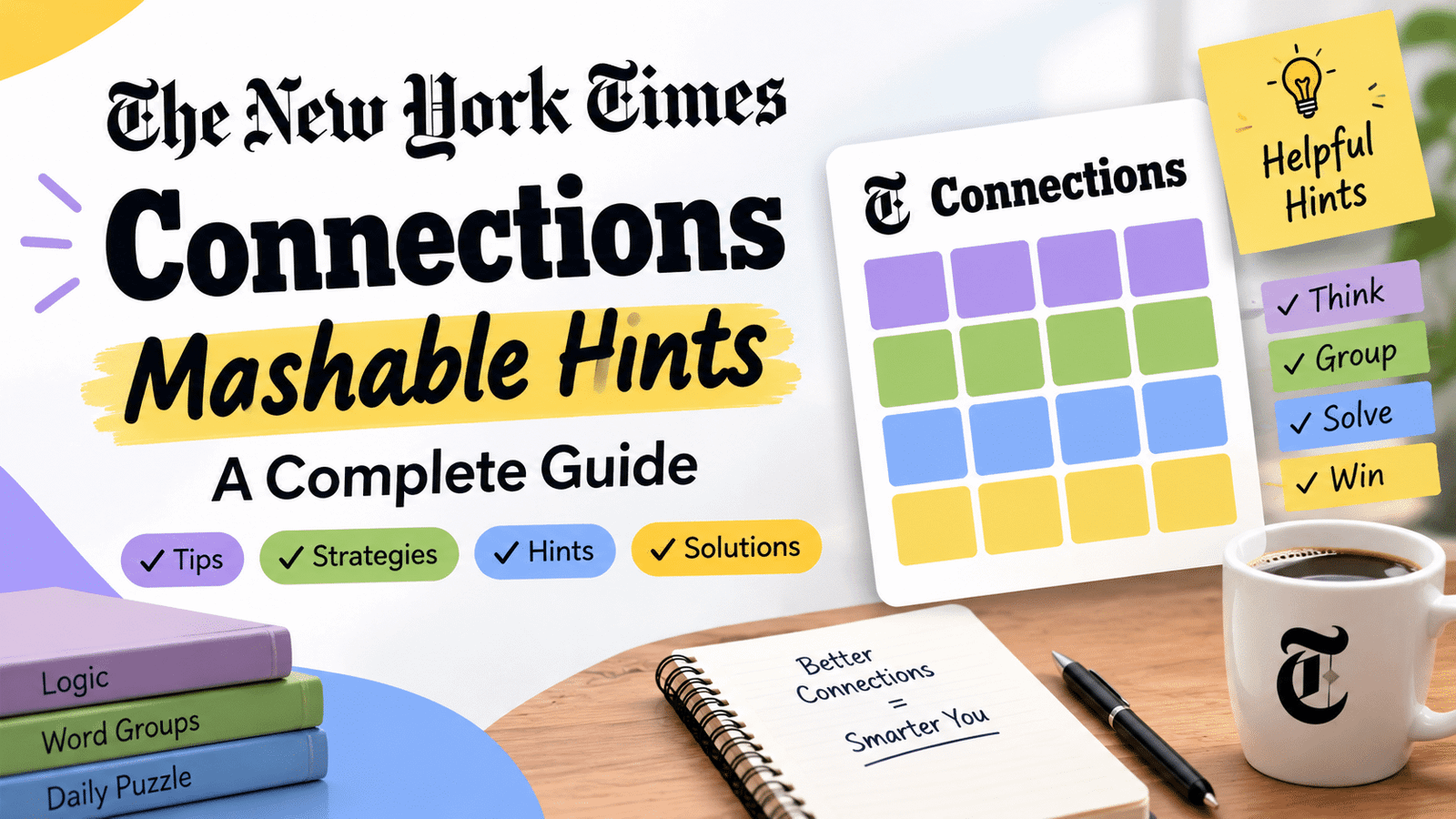
The four groups in Connections have different difficulty levels. Yellow is generally the easiest category, followed by green, blue, and purple. The exact themes vary from puzzle to puzzle. One day, a group may contain types of fruit. Another day, it may involve words linked to music or common phrases.
| Color | General Difficulty | Helpful Approach |
| Yellow | Easiest | Look for obvious similarities |
| Green | Moderate | Check related meanings and uses |
| Blue | Challenging | Consider specialist knowledge or familiar names |
| Purple | Often hardest | Look for wordplay or unusual patterns |
These colors offer a useful guide, but they do not reveal the category by themselves. Some players solve a harder group before an easier one. That is completely normal. Focus on the words you understand instead of following a fixed order. When a group feels difficult, look for a different way to interpret its words.
How to Use Daily Connections Hints Without Spoilers
The smartest way to use hints is to reveal information gradually. Begin by studying the words and writing down possible connections in your mind. If you remain stuck, seek a general clue that describes the category without naming every word. This may be enough to help you finish the puzzle independently.
If the general clue does not work, move to a stronger hint. A category label can point you toward the right idea without identifying the full group. Save complete answers for situations where you genuinely want the solution. This method keeps the game enjoyable and helps you learn from difficult puzzles. When checking new york times connections mashable hints, avoid reading the entire page if you only need one clue. Stop once you have enough information to continue solving on your own.
Best Strategies for Finding Hidden Word Connections
Start by looking for obvious groups. Four animals, colors, or foods may stand out immediately. After that, examine the words that remain. Ask yourself whether they share a meaning, appear in a common phrase, or belong to a similar activity.
Next, look for words with several possible meanings. A word such as “bat” can refer to an animal or sports equipment. That makes it easy to place the word in the wrong group. Consider every likely meaning before submitting a guess. You should also avoid choosing four words simply because they seem related. The intended category must fit all four words in a clear way. If two possible groups compete for the same word, wait until you have stronger evidence. Careful thinking often saves more mistakes than quick guessing.
Common Mistakes to Avoid in Connections
One common mistake is selecting a group too quickly. Four words may seem connected, but the puzzle might use a more specific meaning. For example, several words could relate to travel, while only four describe parts of an airport. Always check whether a more precise connection exists.
Another mistake is ignoring alternative meanings. Familiar words can have unusual uses in certain phrases or topics. Players may also waste guesses by changing their ideas without reviewing the full grid. Instead, pause and compare every remaining word. Remove words from your mental list when they clearly belong elsewhere. Remember that mistakes are part of learning. Each puzzle teaches you to notice new patterns, question assumptions, and make better choices next time.
Why Connections Can Be So Challenging
Connections is challenging because it tests more than vocabulary. You must recognize relationships, understand different meanings, and avoid misleading patterns. The puzzle may include words that fit several possible themes. This creates uncertainty even when you know what every word means.
The game also rewards flexible thinking. A group may involve a familiar expression, a shared word ending, or a connection to popular culture. You might understand each word separately but miss the hidden relationship. That is why taking a short break can help. When you return, you may notice a pattern that was difficult to see earlier. Using new york times connections mashable hints can also introduce a fresh angle when your own ideas stop working. The goal is not to solve everything instantly. It is to enjoy the process of discovering the connection.
How Connections Helps Build Thinking Skills
Connections encourages players to compare ideas and organize information. When you search for four related words, you practice sorting items into groups. You also learn to recognize patterns and consider different explanations. These skills can be useful in school, work, and everyday problem-solving.
The game can also improve attention to language. Words often have several meanings, and familiar expressions can change how you understand them. Regular play gives you more chances to notice these details. However, Connections is mainly a form of entertainment. It should not be treated as a guaranteed way to improve intelligence or prevent memory problems. Enjoy the game because it challenges your thinking and gives you a satisfying moment when a difficult category finally makes sense.
Tips for Beginners Who Want Better Results
If you are new to Connections, do not worry about solving every category immediately. Begin with the words that seem easiest to connect. Build confidence by identifying one group before tackling the more confusing words. This reduces the number of choices you need to consider.
Try playing at a relaxed pace instead of rushing against the clock. Read every word carefully and think about different meanings. If you get stuck, explain your possible categories in simple language. For example, you might think, “These four words are things found in a kitchen.” A clear description makes it easier to test your idea. You can also review completed puzzles to learn how unusual categories work. Over time, you may become better at spotting wordplay and avoiding tempting but incorrect groups.
Where to Find Official Connections Puzzles
The safest place to begin is The New York Times Games website. You can find Connections there alongside other word puzzles. Using the official game ensures that you are working with the published puzzle rather than an unrelated copy.
Mashable and other puzzle websites may provide additional hints or explanations. These can be helpful when you want another perspective. Check the publication date to make sure the guide matches the puzzle you are playing. If you prefer to avoid spoilers, look only at the hint section before scrolling farther. You can also bookmark the official game and visit it each day. Combining the original puzzle with optional clues gives you flexibility without making outside help necessary.
How to Make Connections Part of Your Daily Routine
A short daily puzzle can become a pleasant part of your routine. You might play during breakfast, on a break, or after finishing your main tasks. Choose a time when you can focus without distractions. Even a few quiet minutes can make the experience more enjoyable.
Try to approach each puzzle with curiosity instead of pressure. Some days, the categories will be obvious. On other days, you may need several attempts to understand the wordplay. Both experiences are normal. If you use new york times connections mashable hints, treat them as learning tools rather than shortcuts. Notice what helped you solve the puzzle and apply that lesson tomorrow. Keeping the game fun is more important than getting every answer right.
How to Review a Puzzle After Solving It
Reviewing a completed puzzle helps you understand why the groups worked. Look at each category and consider how its four words fit together. If a connection surprised you, think about the meaning or phrase you missed. This turns a difficult puzzle into a useful learning experience.
You can also identify patterns in your mistakes. Perhaps you often choose words based on their first meaning. Maybe you overlook common phrases or connections to entertainment. Recognizing these habits gives you a practical way to improve. You do not need to keep a detailed record. Simply remembering one interesting lesson from each game can be enough. Over time, you may find it easier to question your first guess and notice less obvious relationships.
Final Thoughts on New York Times Connections Mashable Hints
The New York Times Connections puzzle offers a simple but rewarding daily challenge. It combines vocabulary, logic, and creative thinking in a format that is easy to understand. The real fun comes from discovering how seemingly unrelated words fit into a shared category. With practice, you can learn to recognize patterns and make fewer rushed guesses.
New york times connections mashable hints can support your progress when a puzzle becomes difficult. Start with a general clue, think carefully about the words, and reveal more help only when needed. Always check the date so you do not confuse today’s puzzle with an older one. Most importantly, enjoy the process rather than worrying about a perfect score. Try the next puzzle, test your ideas, and share your favorite solving strategies with other word-game fans.
About the Author