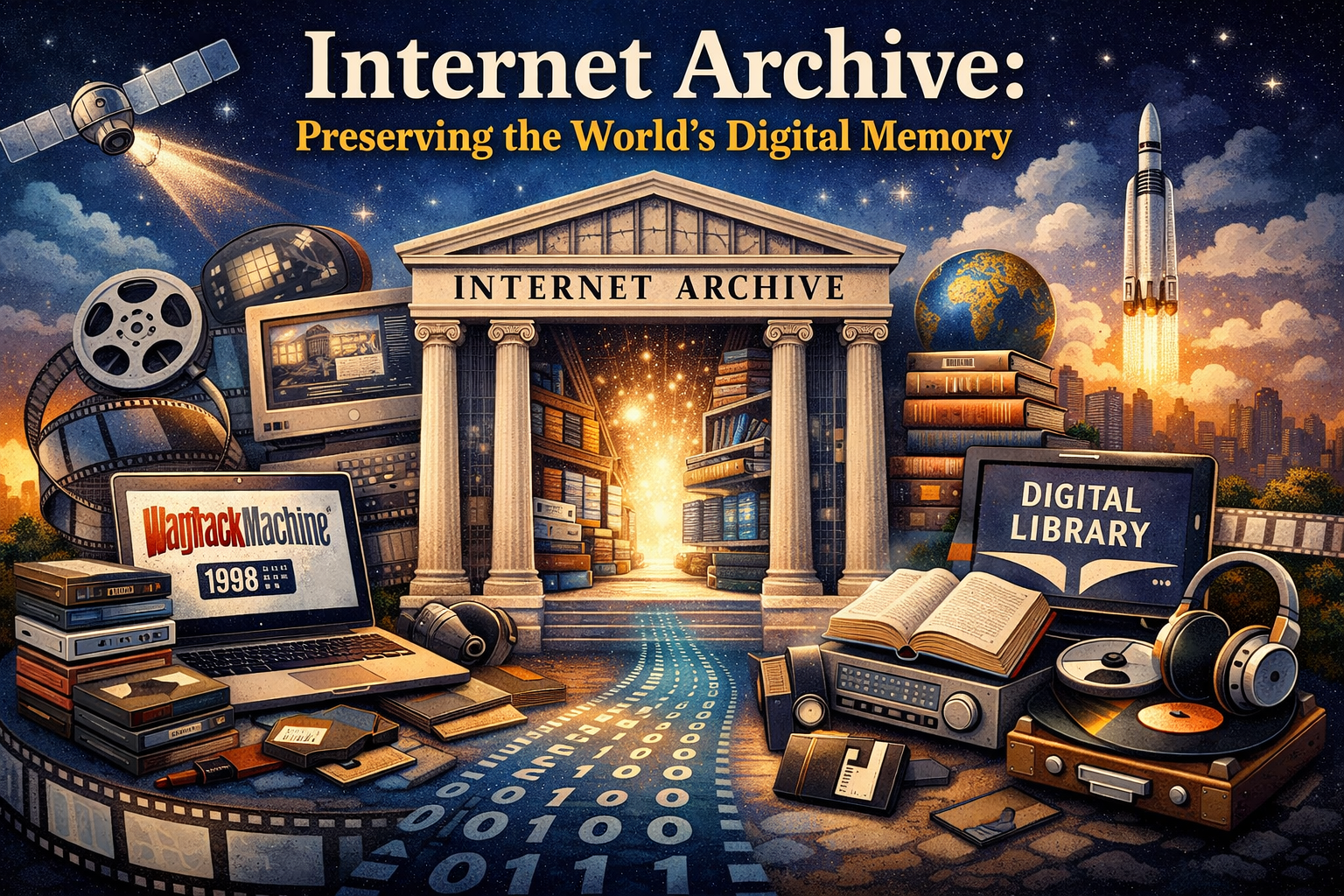
internet archive
Introduction to the Internet Archive
The internet moves fast. Websites appear overnight, trends explode within hours, and entire platforms disappear without warning. In such a rapidly changing digital environment, preserving information becomes incredibly important. This is where the Internet Archive plays a transformative role. Often described as the “library of the internet,” it serves as one of the most ambitious digital preservation projects ever created.
The Internet Archive is a nonprofit organization dedicated to providing universal access to knowledge. It collects, preserves, and provides free access to digital content including websites, books, audio recordings, videos, software, and more. Instead of allowing digital history to vanish, the Archive captures snapshots of culture as it evolves online. Every saved webpage becomes part of a larger historical record that future generations can study and explore.
What makes the Internet Archive especially fascinating is its scale. Billions of webpages, millions of books, and countless multimedia files are stored within its systems. Unlike commercial platforms that prioritize profit, the Archive focuses on accessibility, education, and preservation. It operates under the belief that knowledge should remain available to everyone, regardless of geographic or financial limitations.
In today’s world, where digital information can disappear with a single server shutdown, the Internet Archive acts as a safety net for humanity’s collective memory. Understanding how it works, why it exists, and how it impacts society helps us appreciate the importance of preserving digital culture.
The History and Origins of the Internet Archive
The story of the Internet Archive begins in the mid-1990s, a time when the internet itself was still young. Websites were simple, search engines were experimental, and few people considered the long-term preservation of online content. Most assumed digital information would naturally remain accessible forever. Reality quickly proved otherwise.
The Archive was founded in 1996 by Brewster Kahle, a computer engineer and digital librarian who believed that the internet should function like a public library. Kahle noticed that websites frequently disappeared or changed without leaving any historical record. Important research, early online communities, and cultural artifacts were being lost daily. His solution was simple yet revolutionary: systematically archive the web.
In its early years, the organization focused primarily on web crawling technology. Automated systems began capturing copies of webpages at regular intervals. These early snapshots laid the foundation for what would later become the Wayback Machine, one of the most recognized tools on the internet today. Initially, access was limited to researchers, but public access opened in 2001, dramatically expanding its influence.
As the years passed, the Internet Archive expanded beyond webpages. It began digitizing books, preserving audio recordings, and saving old software. The mission evolved from saving websites to preserving human knowledge across formats. Today, the Archive stands as one of the largest digital preservation institutions in history, continuing to grow every single day.
Mission and Philosophy Behind the Internet Archive
At the heart of the Internet Archive lies a powerful philosophical idea: universal access to knowledge. The organization believes information should not disappear simply because technology changes or corporations shut down services. Instead, knowledge should remain accessible for education, research, and cultural understanding.
The Archive operates similarly to traditional libraries but in a digital environment. Just as libraries preserve printed books for future generations, the Internet Archive preserves digital materials. Its mission emphasizes openness, accessibility, and long-term preservation rather than ownership or commercialization.
Another key principle guiding the Archive is digital permanence. The internet often feels permanent, but in reality, it is fragile. Websites close, links break, and media files vanish. The Archive works to counter this fragility by creating historical backups. These preserved versions allow researchers and everyday users to revisit earlier versions of online content.
The organization also promotes information equity. Many educational resources remain locked behind paywalls or geographic restrictions. By digitizing materials and offering free access, the Archive reduces barriers to learning. This philosophy aligns closely with global education initiatives and open knowledge movements.
Ultimately, the Internet Archive views knowledge as a shared human resource rather than a commercial product. This perspective shapes every project it undertakes.
Understanding the Wayback Machine
One of the most famous tools created by the Internet Archive is the Wayback Machine. This feature allows users to travel through time by viewing archived versions of websites from different dates. It has become an essential tool for journalists, researchers, students, and curious internet users alike.
The Wayback Machine works by capturing snapshots of webpages through automated crawlers. These systems scan the web continuously, saving copies of publicly accessible content. Each snapshot records how a webpage looked at a specific moment, including text, images, and layout when possible.
Using the Wayback Machine is surprisingly simple. A user enters a website URL, and a calendar appears showing available archived dates. Clicking on a specific date loads the saved version of the page. This functionality makes it possible to see how websites evolved over time, compare changes, or recover deleted content.
Beyond curiosity, the tool has serious practical applications. Journalists use it to verify past statements, researchers analyze historical web trends, and businesses monitor branding changes. Courts have even accepted archived webpages as evidence in legal disputes. The Wayback Machine demonstrates how digital preservation can directly influence accountability and transparency online.
Digital Libraries and Book Preservation
While many people associate the Internet Archive with webpages, its digital library is equally impressive. The organization has digitized millions of books from libraries worldwide, creating one of the largest freely accessible collections of texts online.
The digitization process involves scanning physical books using specialized equipment designed to minimize damage. Pages are photographed, processed, and converted into searchable digital formats. Optical Character Recognition (OCR) technology enables users to search within texts, making research significantly easier.
The Archive’s Open Library project aims to create a webpage for every book ever published. This ambitious goal reflects the organization’s commitment to universal knowledge access. Users can borrow digital copies of books through controlled digital lending, mimicking traditional library systems.
Book preservation serves multiple purposes. Rare texts become accessible globally, aging materials receive digital backups, and educational resources reach underserved communities. For many readers, especially those without access to large physical libraries, the Internet Archive functions as a primary learning resource.
Audio and Music Collections
The Internet Archive also preserves an enormous collection of audio recordings. These include live concert recordings, historical speeches, radio broadcasts, podcasts, and independent music releases. Many artists voluntarily share their work through the platform under open licenses.
One unique aspect of the Archive’s audio collection is its focus on cultural preservation. Old radio shows, oral histories, and regional music traditions are stored alongside modern recordings. These materials provide valuable insight into cultural and social history.
Live music archives have gained particular popularity. Fans can listen to performances that might otherwise have been lost. For researchers studying music evolution or performance styles, these recordings offer priceless primary sources.
The Archive’s commitment to open access ensures that audio content remains freely available whenever legally possible. This approach encourages creativity while protecting cultural heritage.
Video Archives and Film Preservation
Video preservation presents unique challenges due to file size and format changes over time. Despite these obstacles, the Internet Archive hosts a vast collection of films, documentaries, educational videos, and historical footage.
Many videos available on the platform fall into the public domain, meaning they can be freely shared and reused. Classic films, government training videos, and early television broadcasts are among the most popular items. These recordings provide insight into past eras and media practices.
Independent creators also use the Archive as a distribution platform. Unlike commercial video hosting services, the Internet Archive prioritizes preservation over monetization. Videos remain accessible without algorithm-driven promotion or advertising pressures.
Film preservation helps prevent cultural loss. Older media formats degrade over time, and many recordings risk permanent disappearance. By digitizing and storing these materials, the Archive ensures future generations can study and enjoy historical visual media.
Software Preservation and Emulation
An often overlooked but incredibly important aspect of the Internet Archive is software preservation. Computer programs, video games, and operating systems represent major milestones in technological history, yet they are among the most vulnerable digital artifacts.
The Archive preserves software by storing original files and enabling browser-based emulation. Users can run classic programs directly in their browsers without installing outdated systems. This feature allows people to experience early computing environments firsthand.
Classic video games are especially popular within this collection. Educational titles, arcade games, and early PC software are preserved not only for entertainment but also for historical research. Developers and historians analyze these programs to understand technological evolution.
Software preservation ensures that future generations can study the origins of modern computing. Without efforts like those of the Internet Archive, much early digital innovation would already be lost.
How Web Archiving Technology Works
Behind the scenes, web archiving relies on sophisticated technology. Automated crawlers scan websites similarly to search engine bots. These crawlers follow links, download content, and store files in specialized archival formats.
The Archive uses formats designed for long-term preservation, ensuring data remains accessible even as technology evolves. Engineers continuously update storage systems to prevent data corruption and hardware obsolescence.
Archiving is not always perfect. Dynamic content, login-protected pages, and certain scripts may not capture correctly. Nevertheless, ongoing improvements in technology have significantly increased accuracy over time.
Massive data storage infrastructure supports the Archive’s operations. Petabytes of information are stored across distributed systems, ensuring redundancy and reliability. This technical backbone enables the Internet Archive to function as a global digital memory system.
Legal Challenges and Copyright Issues
Operating a massive digital archive inevitably involves legal complexities. Copyright laws vary across countries and often conflict with digital preservation goals. The Internet Archive must carefully balance access with legal compliance.
Controlled Digital Lending has sparked debate among publishers and authors. Supporters argue it mirrors traditional library lending, while critics claim it challenges existing copyright frameworks. Legal disputes have highlighted the tension between preservation and intellectual property rights.
Despite challenges, the Archive continues working with libraries, authors, and institutions to find sustainable solutions. Many creators support the mission because it increases visibility and educational access.
Legal discussions surrounding the Internet Archive are shaping the future of digital libraries worldwide. The outcomes may influence how knowledge is shared online for decades to come.
Educational Impact of the Internet Archive
Students and educators benefit enormously from the Internet Archive. Free access to books, historical websites, and multimedia materials provides learning opportunities regardless of economic background.
Teachers use archived websites to demonstrate how information evolves. Students can analyze past news coverage or compare historical perspectives. This ability transforms research into an interactive experience.
The Archive also supports academic research. Scholars access rare materials without traveling to physical archives, saving time and resources. Open access encourages collaboration and knowledge sharing across borders.
Education thrives when information is accessible. By removing barriers, the Internet Archive contributes to global learning equity.
The Role of the Internet Archive in Journalism and Research
Journalists rely heavily on archived webpages to verify claims and track changes. When companies edit statements or remove controversial content, archived versions preserve the original context.
Researchers studying online behavior analyze archived data to understand social trends. Political communication, media evolution, and internet culture all become easier to study through preserved records.
The Archive also protects against misinformation by maintaining historical evidence. Users can compare current claims with past records, strengthening accountability.
In an era where digital narratives change rapidly, reliable archives serve as essential tools for truth verification.
Community Contributions and Open Collaboration
The Internet Archive thrives on community involvement. Volunteers help digitize materials, upload content, and improve metadata accuracy. This collaborative approach reflects the spirit of open knowledge.
Libraries and institutions partner with the Archive to preserve collections that might otherwise remain inaccessible. These partnerships expand the diversity of archived materials.
Users can even save webpages manually, contributing to preservation efforts. This participatory model empowers individuals to help protect digital history.
Community collaboration transforms the Archive into a collective global project rather than a single organization’s effort.
Challenges Facing Digital Preservation
Despite its success, the Internet Archive faces significant challenges. Data storage costs continue to rise as the archive grows. Maintaining long-term infrastructure requires constant funding and innovation.
Technological change presents another obstacle. File formats become obsolete, requiring continuous migration to newer systems. Without careful management, preserved data could become unreadable.
Political and legal pressures also impact operations. Different countries maintain varying policies regarding digital content, complicating global accessibility.
These challenges highlight the complexity of preserving digital history at scale. Yet the Archive continues adapting to ensure long-term sustainability.
The Future of the Internet Archive
Looking ahead, the Internet Archive aims to expand its collections and improve accessibility. Advances in artificial intelligence may enhance search capabilities, making it easier to navigate massive datasets.
Increased collaboration with libraries and educational institutions will likely broaden global participation. Digitization projects continue bringing offline knowledge into the digital world.
The Archive also plays a role in preserving emerging technologies such as virtual reality and interactive media. As digital experiences evolve, preservation methods must evolve alongside them.
The future of the Internet Archive reflects a broader question: how humanity chooses to remember itself in the digital age.
Why the Internet Archive Matters More Than Ever
The internet shapes modern culture, communication, and knowledge. Without preservation, large portions of human history could disappear silently. The Internet Archive ensures that digital information remains accessible beyond temporary trends and corporate decisions.
Its importance extends beyond nostalgia. Researchers, educators, journalists, and everyday users depend on reliable historical records. The Archive protects transparency and supports informed decision-making.
As society becomes increasingly digital, preserving online content becomes as essential as preserving books or monuments. The Internet Archive fulfills this responsibility on a global scale.
In many ways, it represents humanity’s collective memory — a living record of ideas, creativity, and communication across generations.
Conclusion
The Internet Archive stands as one of the most important digital institutions ever created. By preserving websites, books, audio, video, and software, it safeguards humanity’s cultural and intellectual heritage. Its mission of universal access to knowledge challenges traditional limitations and promotes global education.
From the Wayback Machine to massive digital libraries, the Archive demonstrates how technology can serve public good rather than commercial interests alone. Despite legal and technical challenges, it continues expanding its collections and improving accessibility.
In a world where digital information can vanish instantly, the Internet Archive provides continuity. It allows us to revisit the past, understand the present, and prepare for the future. More than just a website, it is a global memory project — one that ensures knowledge remains available for generations yet to come.
you may have missed
About the Author