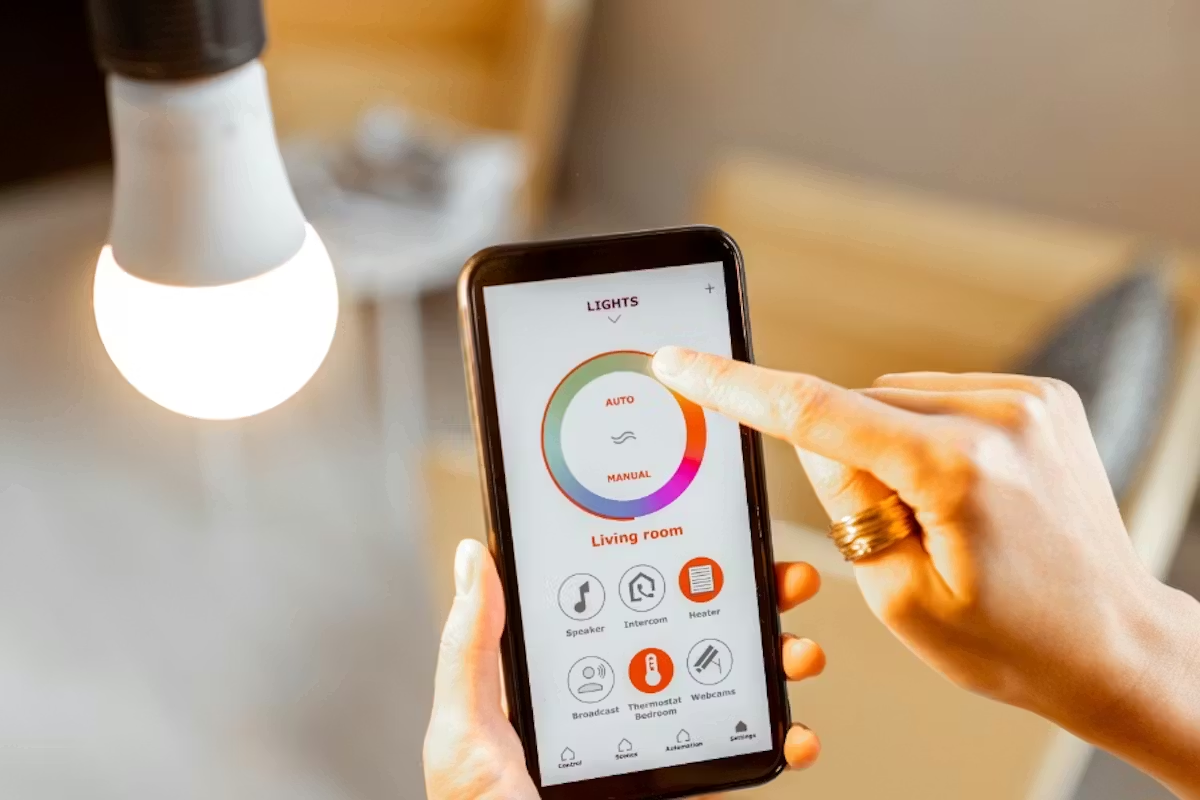
bulb app
Introduction to the Bulb App
The way we interact with our homes has changed dramatically over the past decade. What once required manual switches and physical effort can now be controlled with a simple tap on a smartphone. Among the innovations leading this transformation is the bulb app, a smart application designed to control intelligent lighting systems. Whether you want to dim your lights, change colors, automate schedules, or reduce energy consumption, the bulb app makes it possible with remarkable ease.
At its core, a bulb app acts as the control center for smart lighting. Instead of relying on traditional wall switches, users can adjust brightness, set moods, and even sync lighting with music or movies directly from their mobile devices. This not only enhances convenience but also introduces a level of personalization that was previously unimaginable. Imagine walking into a room that automatically lights up in your favorite color, or waking up to a gentle sunrise simulation instead of a harsh alarm.
Another reason for the growing popularity of bulb apps is their contribution to energy efficiency. Smart bulbs typically consume less electricity than traditional incandescent lights, and the app allows users to monitor usage patterns. Over time, this can lead to noticeable savings on electricity bills. More importantly, it supports environmentally conscious living—a priority for many modern households.
The bulb app is no longer a luxury reserved for tech enthusiasts. With affordable smart bulbs flooding the market, more people are embracing connected lighting. Whether you live in a small apartment or a large house, the bulb app can elevate your living experience by blending technology with comfort.
What Is a Bulb App?
A bulb app is a mobile or desktop application that allows users to control smart light bulbs remotely. These apps typically connect to bulbs through Wi-Fi, Bluetooth, or a dedicated hub, enabling full control from anywhere with an internet connection. From adjusting brightness levels to selecting millions of colors, the bulb app provides features that traditional lighting simply cannot match.
One of the most appealing aspects of a bulb app is its intuitive interface. Most apps are designed with simplicity in mind, allowing even non-technical users to navigate settings easily. After installation, the app usually guides users through a quick setup process that pairs the bulb with the device. Within minutes, your home lighting can become fully customizable.
Beyond basic controls, bulb apps often include advanced features like scene creation. Scenes allow you to group multiple bulbs together and assign them specific settings. For example, you might create a “Movie Night” scene that dims the lights and adds a warm tone, or a “Focus Mode” with bright white lighting for productivity. These small adjustments can significantly impact mood and performance.
Security is another overlooked advantage. Many bulb apps enable remote access, so you can turn lights on or off while away from home. This can create the illusion that someone is present, potentially discouraging intruders. It’s a simple yet effective layer of home security that integrates seamlessly into daily life.
How the Bulb App Works
Understanding how a bulb app operates helps users appreciate the technology behind it. At a basic level, the app communicates with smart bulbs using wireless protocols such as Wi-Fi, Zigbee, or Bluetooth. Once connected, commands sent from your phone are instantly executed by the bulb.
The setup process usually starts with installing the bulb into a socket and downloading the corresponding app. After creating an account, the app scans for nearby devices and pairs with the bulb. Some systems require a bridge or hub, which acts as a translator between your router and the bulbs. Others connect directly to Wi-Fi, simplifying installation.
Cloud technology often plays a role in bulb app functionality. When you send a command—like turning off lights while at work—the signal travels through secure servers before reaching your home network. This ensures that you maintain control regardless of location. Many apps also store preferences in the cloud, so settings remain intact even if you change devices.
Latency, or delay, is typically minimal with modern systems. Advances in connectivity mean lights respond almost instantly, creating a smooth user experience. Some apps even allow offline control via Bluetooth, ensuring functionality during internet outages.
Compatibility is another key factor. Many bulb apps integrate with voice assistants, allowing users to control lighting through spoken commands. This hands-free convenience is especially useful when multitasking or entering a dark room with full hands.
Key Features of a Bulb App
The bulb app stands out because of its rich feature set. While specific capabilities vary by brand, most apps include tools designed to enhance comfort, efficiency, and creativity.
One standout feature is brightness control. Instead of a simple on/off function, users can fine-tune light intensity to match different activities. Soft lighting can create a relaxing atmosphere, while brighter settings improve visibility for reading or working.
Color customization is another game-changer. Many smart bulbs support millions of colors, enabling endless design possibilities. Whether you want a calming blue bedroom or vibrant party lighting, the bulb app makes experimentation effortless.
Scheduling adds another layer of convenience. You can program lights to turn on at sunset or gradually brighten in the morning. This not only supports better routines but can also improve sleep patterns by aligning lighting with natural circadian rhythms.
Energy monitoring is increasingly common as well. Some apps provide insights into electricity usage, helping households make smarter decisions. Over time, this awareness can reduce both costs and environmental impact.
Finally, grouping and zoning allow users to control multiple bulbs simultaneously. Instead of adjusting each light individually, you can manage entire rooms—or even the whole house—with a single command.
Benefits of Using a Bulb App
Adopting a bulb app offers far more than simple convenience. It fundamentally changes how people experience their living spaces.
First and foremost, there’s the comfort factor. Adjusting lighting without leaving the couch might sound minor, but it quickly becomes indispensable. The ability to create the perfect ambiance for any situation adds a layer of luxury to everyday life.
Energy efficiency is another major benefit. Smart bulbs often use LED technology, which consumes significantly less power than traditional options. Combined with scheduling features, this ensures lights are never left on unnecessarily.
Safety also improves with smart lighting. Automated pathways can illuminate hallways at night, reducing the risk of accidents. Outdoor lighting schedules can deter unwanted visitors, making your property feel more secure.
Accessibility deserves special mention. For elderly individuals or those with mobility challenges, controlling lights via an app or voice command eliminates the need for physical switches. This fosters independence and makes homes more inclusive.
Another advantage is scalability. You don’t need to transform your entire home overnight. Many users start with a single bulb and gradually expand their setup. The bulb app grows with your needs, making it a flexible long-term investment.
Bulb Apps and Smart Home Integration
Smart homes thrive on connectivity, and the bulb app plays a central role in this ecosystem. When integrated with other smart devices, lighting becomes part of a larger automated network.
For instance, you can connect lights to motion sensors so they activate when someone enters a room. Pair them with smart thermostats, and your home can adjust lighting and temperature simultaneously for maximum comfort.
Voice control is another popular integration. Instead of reaching for your phone, you can simply issue a command to adjust brightness or switch colors. This hands-free approach feels futuristic yet quickly becomes second nature.
Automation routines elevate the experience even further. Imagine a “Good Night” routine that locks doors, lowers the thermostat, and turns off all lights with a single tap. Or a “Morning Boost” routine that gradually brightens your bedroom while playing energizing music.
Interoperability is improving as well. Many bulb apps now support cross-platform standards, making it easier to mix and match devices from different manufacturers. This prevents users from being locked into a single ecosystem.
Ultimately, the bulb app is more than just a lighting tool—it’s a gateway into the broader world of home automation.
Setting Up Your Bulb App for the First Time
Getting started with a bulb app is typically straightforward, even for beginners. The process usually begins with selecting compatible smart bulbs and installing them in your preferred fixtures.
After downloading the app, you’ll create an account and follow the pairing instructions. Most apps feature step-by-step guidance, ensuring minimal confusion. Within minutes, your bulbs should appear on the dashboard, ready for customization.
Naming your bulbs is an often-overlooked step that can save time later. Instead of generic labels, choose names based on rooms or functions, such as “Kitchen Light” or “Desk Lamp.” This makes voice commands and automation much smoother.
Next, explore the app’s settings. Adjust brightness defaults, experiment with colors, and test scheduling features. Creating a few basic scenes early on can help you understand the app’s capabilities.
Finally, consider firmware updates. Manufacturers frequently release updates that improve performance and security. Keeping your bulbs and app current ensures a reliable experience.
With these steps completed, you’ll be well on your way to enjoying smarter, more responsive lighting.
Customization and Personalization
One of the most exciting aspects of a bulb app is the ability to tailor lighting to your personality and lifestyle. Unlike traditional bulbs, smart lighting adapts to your preferences rather than forcing you to adapt to it.
Color themes can transform the feel of a room instantly. Warm tones create a cozy environment, while cooler shades promote alertness. Seasonal colors can add festive flair during holidays, making your home feel more dynamic.
Scenes take personalization even further. You might design a “Relaxation” scene with dim amber lighting for evenings or a “Creative Space” scene with bright, energizing hues. Over time, these presets become part of your daily rhythm.
Many apps also allow gradual transitions between lighting states. Instead of abrupt changes, lights can fade smoothly, enhancing comfort and reducing eye strain.
Some advanced bulb apps even learn from user behavior. By analyzing patterns, they can suggest automations that align with your habits. This predictive element adds a subtle layer of intelligence to your home.
Personalization isn’t just about aesthetics—it’s about crafting an environment that supports your well-being.
Energy Efficiency and Environmental Impact
As sustainability becomes a global priority, the bulb app stands out as a practical tool for reducing energy consumption. Smart bulbs typically use LED technology, which lasts longer and requires less power than older lighting options.
Scheduling plays a significant role in conservation. Lights can automatically switch off when not needed, eliminating the common problem of forgotten fixtures. Over months and years, these small savings accumulate.
Dimming features also contribute to efficiency. Running bulbs at lower brightness consumes less electricity while extending their lifespan. The app makes these adjustments effortless.
Some bulb apps provide detailed analytics, showing exactly how much energy your lighting uses. This transparency encourages mindful habits and helps households identify opportunities for improvement.
Beyond personal benefits, reduced energy demand supports broader environmental goals. Lower consumption means fewer greenhouse gas emissions and less strain on power grids.
Choosing a bulb app isn’t just a technological upgrade—it’s a step toward responsible living.
Common Challenges and How to Overcome Them
While bulb apps offer numerous advantages, users may occasionally encounter challenges. Fortunately, most issues are easy to resolve with a little troubleshooting.
Connectivity problems are among the most common. If a bulb becomes unresponsive, restarting the router or ensuring the bulb is within range often fixes the issue. Keeping firmware updated can also prevent glitches.
Compatibility concerns sometimes arise when mixing devices from different brands. Checking supported standards before purchasing can save frustration later.
Another challenge is over-automation. While it’s tempting to automate everything, excessive routines can become confusing. Start simple and expand gradually to maintain clarity.
Privacy is a consideration as well. Since many apps rely on cloud services, choosing reputable manufacturers with strong security practices is essential.
Finally, learning curves can feel intimidating at first. However, most users find that familiarity develops quickly. Once you experience the convenience, it’s hard to imagine returning to traditional lighting.
The Future of Bulb Apps
The evolution of bulb apps is far from over. As technology advances, these applications are poised to become even more intelligent and intuitive.
Artificial intelligence is likely to play a larger role, enabling apps to anticipate user needs with greater accuracy. Instead of manually creating schedules, your lighting could adapt automatically based on routines and environmental conditions.
Integration with wearable devices may also expand. Imagine lights adjusting based on your sleep patterns or activity levels, creating a home that responds to your physical state.
Augmented reality could simplify setup by guiding users visually through placement and configuration. Meanwhile, improved connectivity standards promise faster, more reliable communication between devices.
Sustainability will remain a driving force. Future bulbs may optimize energy use in real time, balancing brightness with efficiency more effectively than ever before.
As these innovations unfold, the bulb app will continue to redefine what modern lighting can achieve.
Tips for Getting the Most Out of Your Bulb App
Maximizing the potential of a bulb app requires a thoughtful approach. Start by identifying areas of your home where smart lighting will have the greatest impact—often living rooms, bedrooms, and entryways.
Experiment with scenes until you find combinations that suit your lifestyle. Don’t hesitate to tweak settings; customization is part of the experience.
Use scheduling strategically. Align lighting with your daily routine to enhance productivity during the day and relaxation at night.
Consider grouping bulbs by function rather than location. For example, a “Reading Lights” group might include fixtures from different rooms but serve the same purpose.
Regularly review energy reports if available. These insights can guide smarter usage patterns.
Lastly, stay curious. New features and updates appear frequently, so exploring the app periodically ensures you’re benefiting from the latest improvements.
Conclusion
The bulb app represents a powerful intersection of technology, design, and practicality. What began as a simple way to control lights has evolved into a cornerstone of modern smart homes. With features like remote access, automation, personalization, and energy monitoring, the bulb app delivers both convenience and efficiency.
More importantly, it transforms lighting from a static utility into a dynamic experience. Whether you’re setting the mood for a gathering, improving focus while working, or creating a safer environment for your family, the possibilities are nearly endless.
As smart technology continues to advance, the bulb app will only grow more capable. For anyone seeking a smarter, more responsive home, adopting a bulb app is not just a trend—it’s a forward-looking decision that enhances everyday living.
FAQs
What is a bulb app used for?
A bulb app is used to control smart light bulbs remotely, allowing users to adjust brightness, colors, schedules, and automation from their devices.
Do bulb apps save electricity?
Yes, they help reduce energy usage by enabling scheduling, dimming, and efficient LED operation.
Can I control my lights when I’m not at home?
Most bulb apps offer remote access, letting you manage lighting from anywhere with an internet connection.
Are bulb apps difficult to set up?
No, setup is usually quick and guided through step-by-step instructions within the app.
Do bulb apps work with voice assistants?
Many bulb apps integrate with voice control systems, allowing hands-free operation.
you may have missed
bulb app
About the Author